

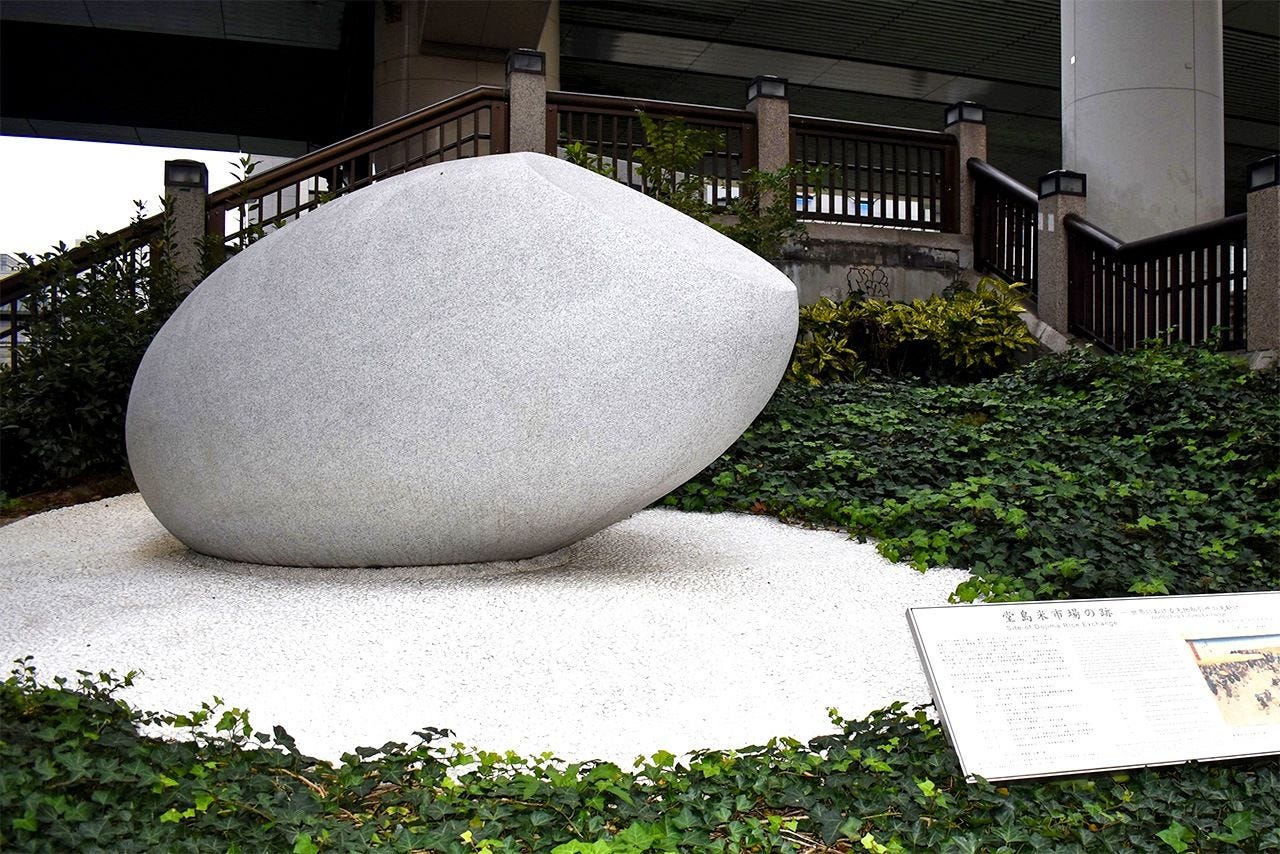
Hey! I’m back! Apologies to my four loyal subscribers for the radio silence these past weeks. I was off the grid in Tokyo delving into the origins of Japanese charting techniques and the culture that birthed them —and eating sushi.
Japanese cities are weirdly quiet. You find these pockets of profound silence squeezed between the neon-soaked chaos of Shibuya Crossing and the incense-heavy air of ancient temples. In that quiet, you can almost hear the thoughts of Munehisa Homma, the 18th-century rice merchant who pioneered candlestick charting.
Homma recognized a fundamental truth that many modern ‘quants’ ignore: markets are not just cold equations of supply and demand. They are driven by human emotion where the price action is a fractal of human fear and greed. His techniques became the foundation of modern technical analysis, evolving into the candlestick charts we stare at today. He understood that while the price is what you pay, the psychology—of the herd—is what you’re actually trading.
The Candles
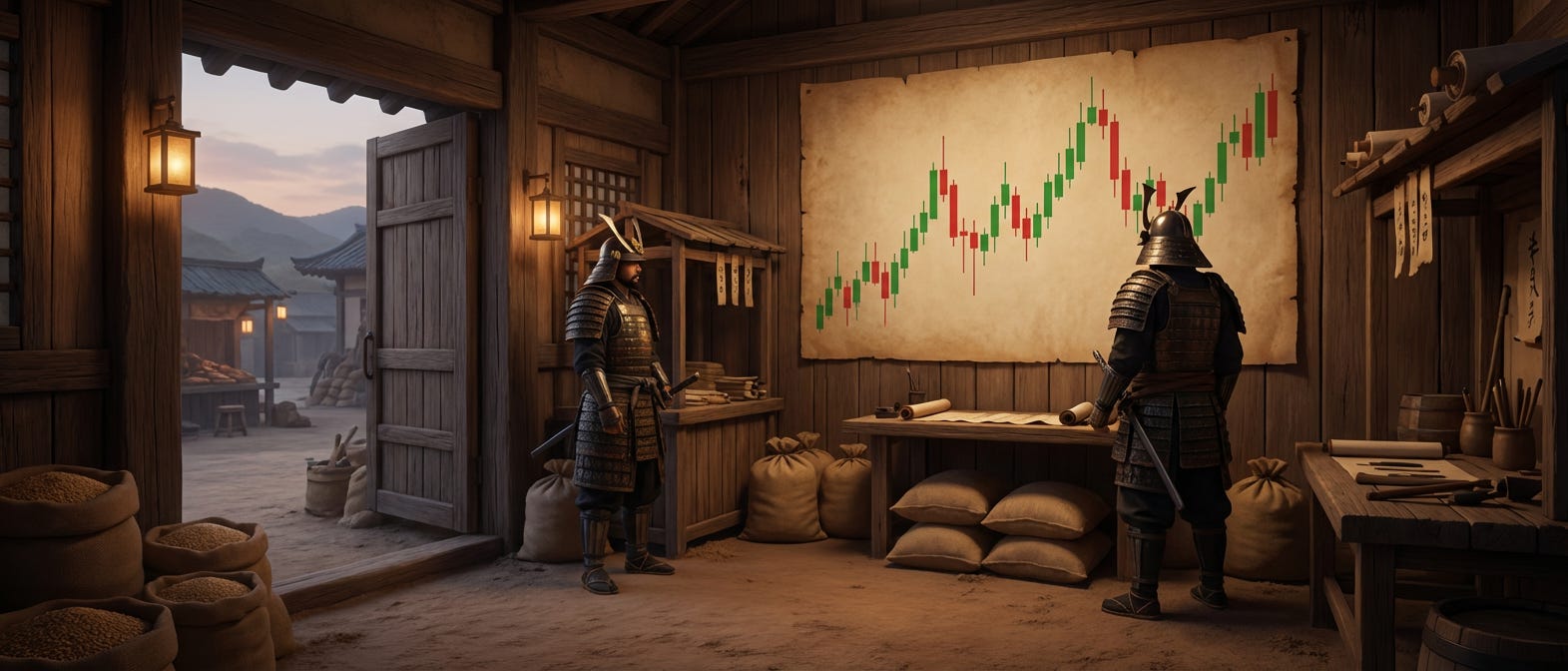
What we know today as Japanese candlesticks stayed secret for centuries mainly because they were a competitive edge in Japan’s rice futures markets.
Homma developed the system to dominate rice trading by spotting emotional patterns that others missed. This gave him massive wins and was able to create a legendary fortune achieving honorary samurai status.
He also modified a variation of traditional candlesticks using averaged prices (from current + previous bars) to smooth trends and reduce noise. This noise reductions is what fuels the powerful Heiken-Ashi candles.
It remained confined to Japan for ~250–300 years until global finance interconnected in the 1980s, and Steve Nison popularized it in the West with his 1991 book.
The Heikin-Ashi
Heikin-Ashi basically means an “average bar” and is used to filter emotional noise. In trading, is about waiting for the smoothed confirmation, then commit like a samurai’s strike. In life? Apply the same: average out daily distractions (the “noise” of opinions, setbacks) to focus on long-term trends. Build positions (or habits) with capped risk, let asymmetry do the work, and harvest convexity when the trend turns.
The Synthesis: Lighting the Way Through the Fog
This is the fractal nature of a well-lived life: We often judge ourselves by our “wicks”—our highest highs or our most panicked moments. But Homma teaches us that the Body of the candle is the only thing that sustains the trend. In life, your “wicks” are your impulses; your “body” is your character.
Homma became the richest man in Japan not by knowing the price of rice, but by knowing the hearts of the men buying it.
Me encantan tus reflexiones, Juan!!